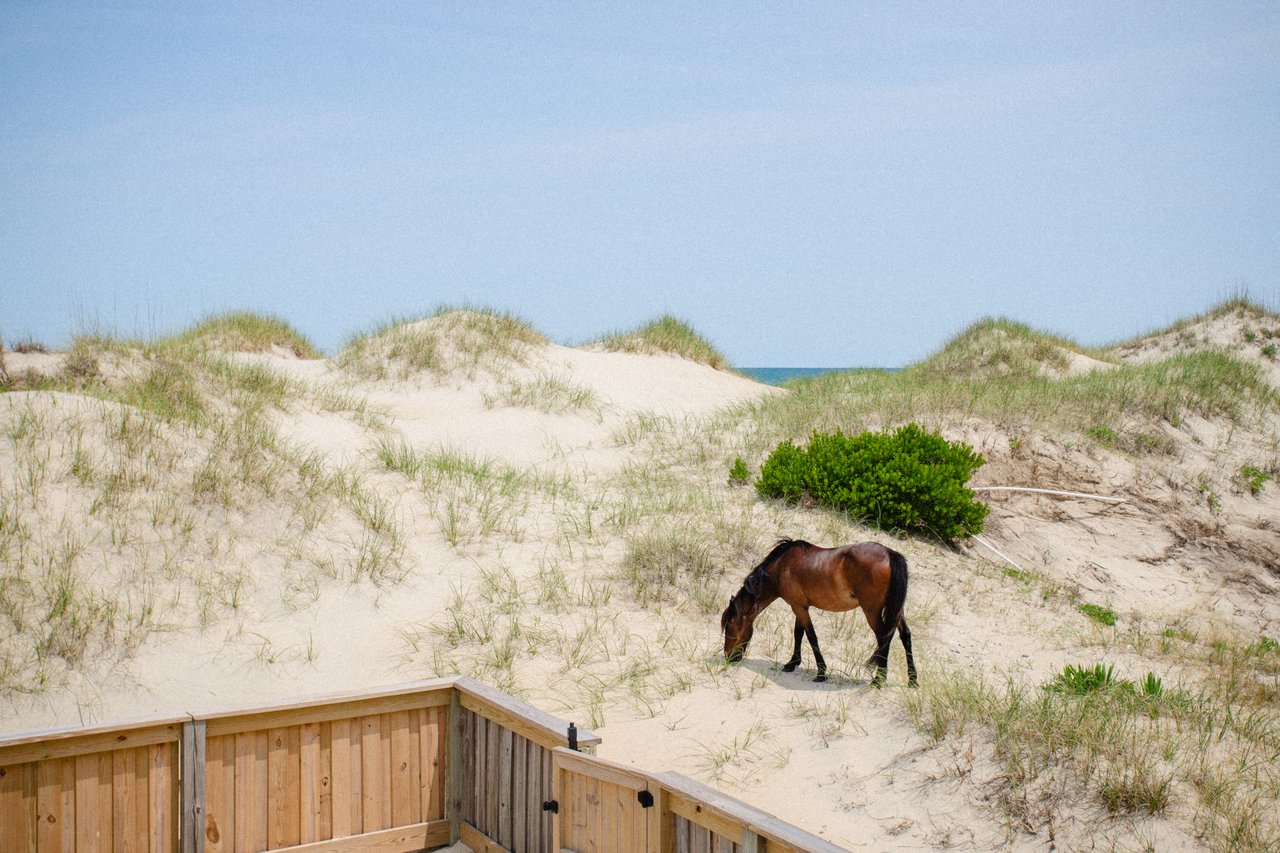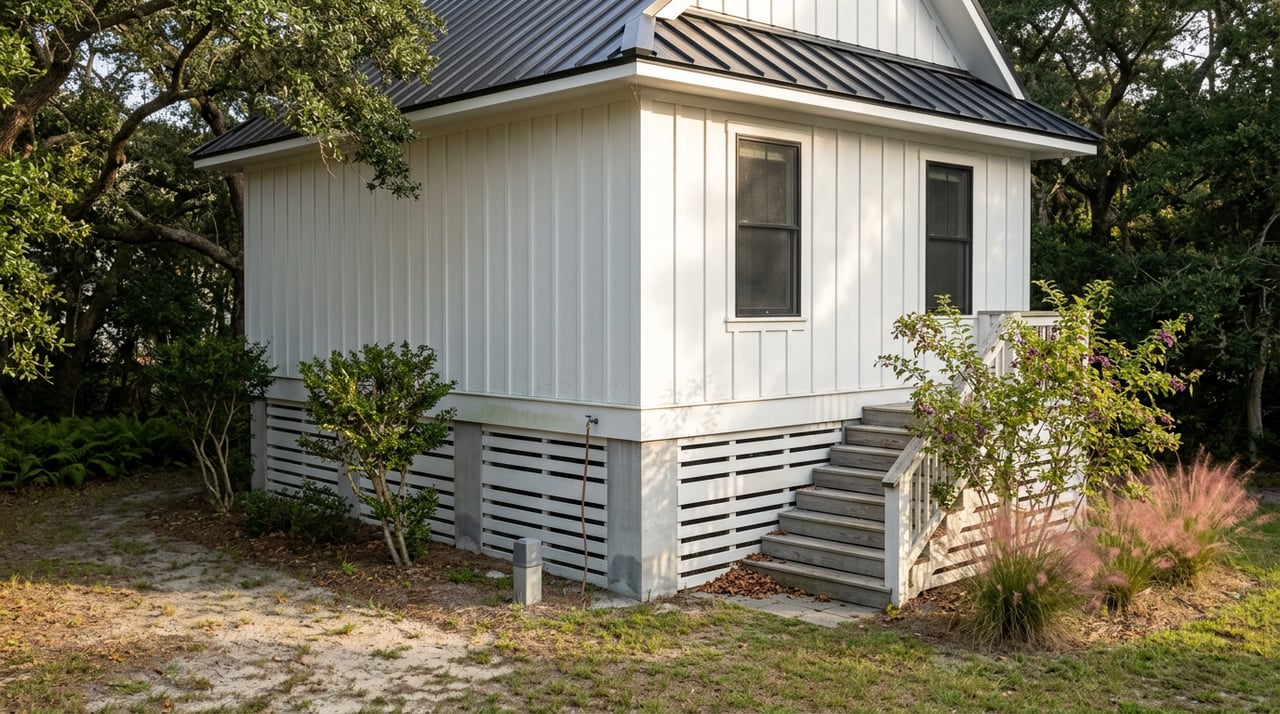
Say you're touring an older cottage in Kitty Hawk, the kind Twiddy's own listings describe as a classic oceanfront beach box, the sort of place that stands apart from the larger new builds going up elsewhere on the Outer Banks. The booking calendar says it sleeps ten. Three bedrooms upstairs, a bunk room off the kitchen, a pullout in the den. The rental income projection looks great on paper. Nobody mentions the piece of paper that actually controls how many people can legally stay there, and it isn't the floor plan.
It's the septic permit sitting in a file at the Dare County Health Department, and in a lot of Kitty Hawk's older housing stock, that number is smaller than the one on the rental listing.
Where the Real Ceiling Sits
North Carolina sizes septic systems by bedroom count, not bathroom count, and not by however many people a homeowner decides to advertise. The state's working assumption is two occupants per bedroom. A three-bedroom system is engineered to handle six people, full stop, regardless of how many sofa beds or bunk rooms get added later. Turning a den into a fourth bedroom doesn't just change the floor plan. It changes the design flow the system was permitted to handle, and that triggers a capacity review with the county before the work can move forward, according to a 2026 breakdown from Island Contractors, a firm that has handled close to 500 permitted projects on the Outer Banks.
This isn't a new rule reacting to something in the news. It's been the governing math for decades. Dare County's health department was already flagging the gap between advertised rental occupancy and actual septic capacity back in 1994, when the county's own health director told a Virginia-Pilot reporter that most of that year's rental brochures advertised sleeping capacities exceeding what the septic permits allowed, often by four people or more. The response then was the same as it is now: property managers started asking owners to document what a house was actually built and equipped to accommodate, because the permit, not the marketing copy, was always the real number.
The Math Behind the Permit
The occupancy formula has held steady. The assumed daily wastewater flow per person is the part that's been updated over the decades, and it's worth seeing side by side with what the county actually permits for.
| Bedrooms | Assumed Occupants | Design Flow (at ~110 gal/person/day) |
|---|---|---|
| 2 | 4 | 440 gallons/day |
| 3 | 6 | 660 gallons/day |
| 4 | 8 | 880 gallons/day |
Add a bedroom and you're not just adding square footage. You're adding roughly 220 gallons a day to what the tank and drainfield need to process, which usually means a larger tank and more drainfield area, not just a bigger closet.
Why Kitty Hawk Feels This More Than Newer Construction
This mismatch isn't spread evenly across the Outer Banks. It concentrates in older housing stock, and Kitty Hawk has more of it than most of its neighbors. Twiddy's own description of the town leans into this directly: Kitty Hawk is known for its classic oceanfront cottages, in a market where larger, newer homes have become the norm elsewhere. A lot of that inventory dates to the 1970s and 1980s, built to septic standards that were considerably looser than what's required today, and often sitting on the kind of small, tightly platted in-town lots that leave little room to expand a drainfield even if the owner wanted to.
That combination, older permit, tighter lot, is exactly what Island Contractors points to as the scenario most likely to force a homeowner into a more expensive fix. When a conventional system can't be enlarged because there's nowhere for it to go, the alternatives are low-pressure dosing, drip irrigation, or aerobic treatment units, and those come with real upfront cost plus ongoing maintenance contracts that a straightforward permit renewal wouldn't require.
There's a quieter version of this same story a few minutes inland, too. Kitty Hawk Woods Coastal Reserve, the maritime forest that runs behind much of the town, is part of what's kept development here more incremental than the wide, cleared lots you'll find further north. Older lots, tighter footprints, permits filed decades ago. It's a good place to buy a cottage. It's also a place where the paperwork deserves more attention than the listing photos.
What the Real Estate Commission Actually Says About This
This isn't a gray area agents get to interpret loosely. The North Carolina Real Estate Commission has published guidance specifically warning brokers against overstating bedroom count or sleeping capacity relative to what a property's septic permit allows, even when a disclaimer gets tucked into the listing remarks. If the permit says three bedrooms, advertising the home as anything higher, sofa bed included, is treated as a misrepresentation regardless of how the disclosure is worded. When a permit can't be located, the Commission points brokers toward tax records as the next-best proxy, and flags a simple tell: if a home shows four bedrooms in the marketing but tax records list three, that gap usually traces back to the septic limit.
What a Mismatch Actually Costs
None of this shows up in a title search. It shows up when someone finally calls the county, and by then the numbers tend to be concrete rather than theoretical.
- A septic evaluation from Dare County's Environmental Health office typically runs about $75, and a repair permit carries a similar fee, according to a local property management firm's owner guide, though it's worth confirming current fees directly with the county since schedules do change.
- Drainfield replacement, once a system is found to be failing or undersized, generally runs $1,500 to $3,000 depending on bedroom count and system age.
- If the lot can't support an expanded conventional system, the alternative technologies (low-pressure dosing, drip irrigation, aerobic units) cost meaningfully more upfront, plus recurring service contracts most conventional systems never require.
Roughly 90 percent of homes in Dare County run on individual septic systems rather than municipal sewer, which means this isn't a fringe issue limited to a handful of older streets. It's the default condition of most of the local housing stock, Kitty Hawk included.
Before You Write the Offer or List the House
- Request a copy of the septic permit from Dare County's Health Department before you get attached to a bedroom count. It's a public record tied to the property address.
- Compare that permitted bedroom number against the tax record and the actual floor plan. A gap between any of the three is worth understanding before, not after, closing.
- If you're planning to add a bedroom or convert a den, ask a contractor to check drainfield capacity and lot coverage together. On a small in-town Kitty Hawk lot, coverage limits and septic limits often collide at the same square footage.
- If you're the seller and the house has been marketed with a sleeping capacity higher than the permit supports, get that reconciled before your next rental season, not after a tenant complaint or a buyer's inspection flags it.
A Few Questions Worth Asking Before Closing
Does a kitchen or bathroom renovation trigger a septic review? Not usually, as long as bedroom count stays the same. The county's focus is bedrooms, since that's what drives occupancy math, not fixtures.
What if the original permit can't be found? It happens, especially on cottages that have changed hands several times since the 1970s or 80s. The county can typically re-evaluate the lot, and in the meantime tax records serve as the working reference point for legal bedroom count.
Does public water access change any of this? No. Kitty Hawk properties are served by Dare County's water system, but water supply and wastewater disposal are handled separately. Being on public water doesn't change how septic capacity is permitted or enforced.
The number that actually sets a Kitty Hawk cottage's income ceiling was decided years before the current owner ever listed it for rent. Knowing what it is, and confirming it before you're the one signing paperwork, is the difference between a projection and a plan.
If you're evaluating a Kitty Hawk cottage, or trying to figure out what your current one is really permitted to earn, Jason Summerton can help you pull the right records before you make a decision either way. Let's Connect.