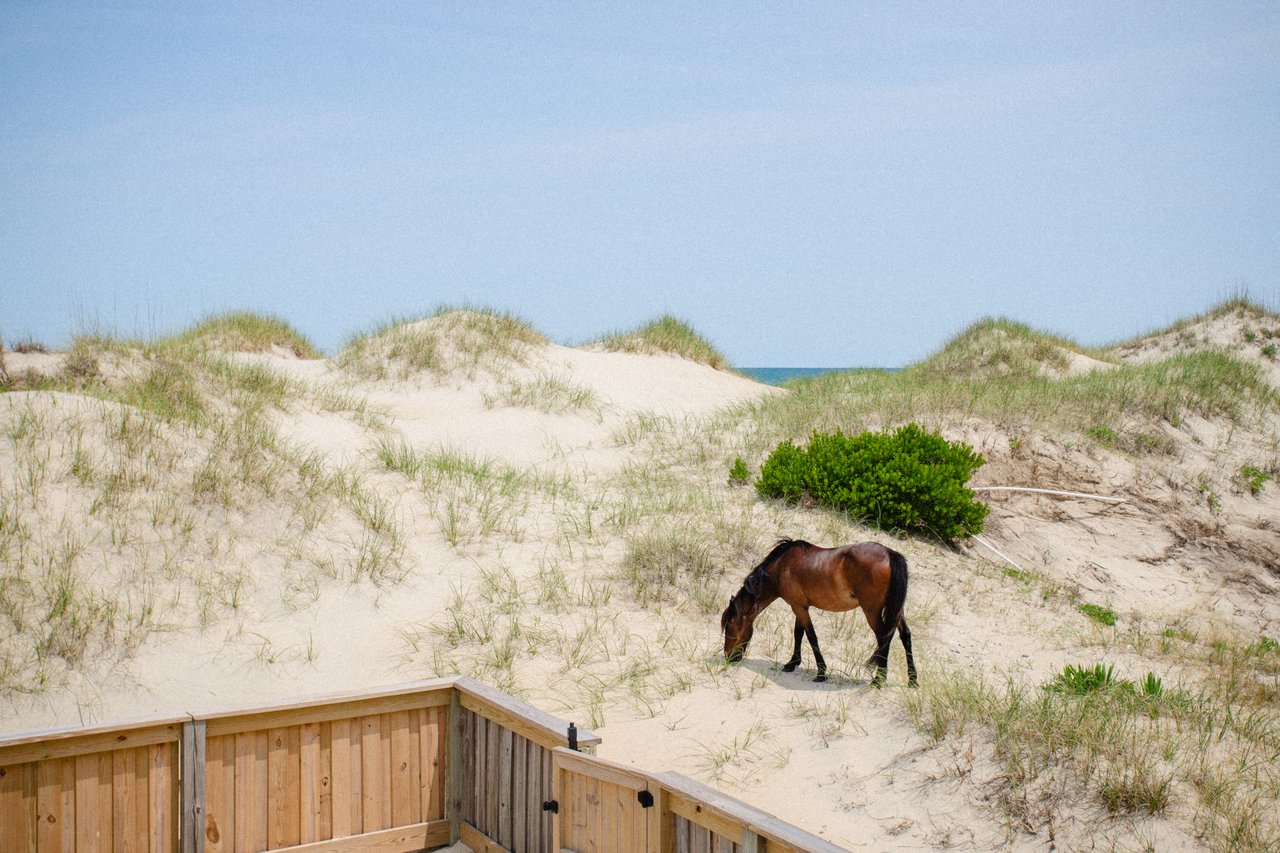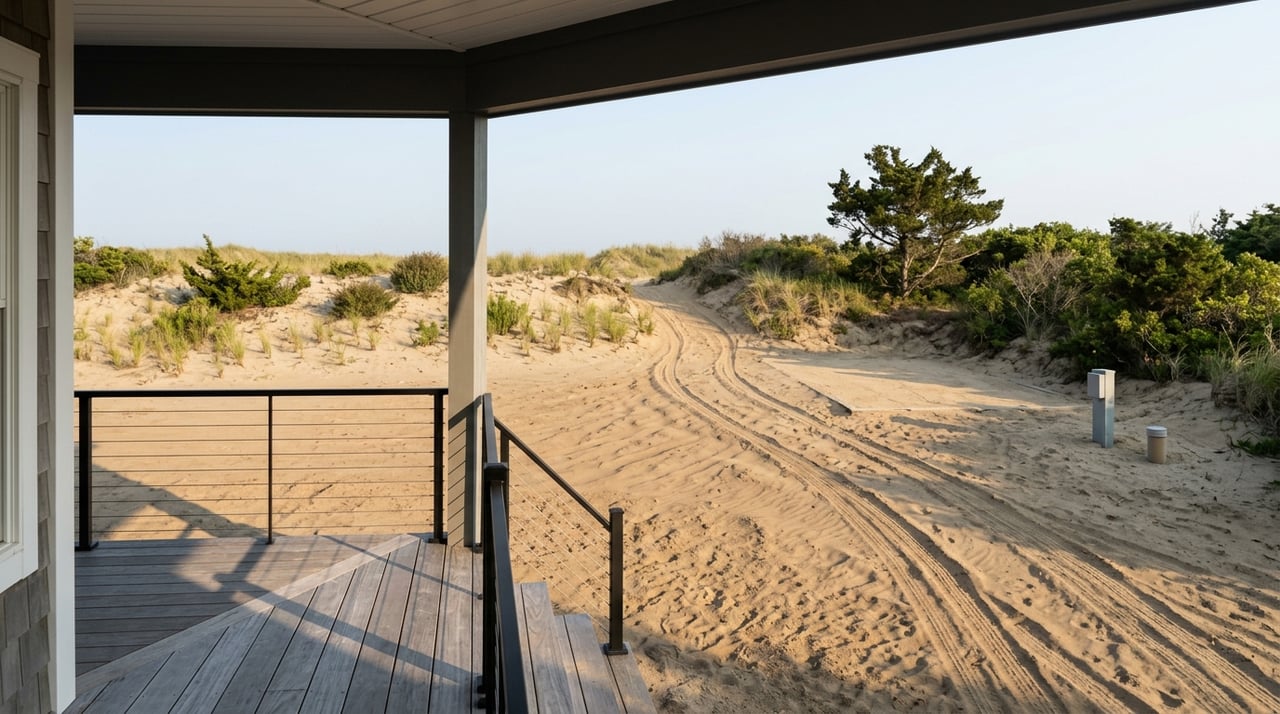
Buying land in Carova Beach can feel simple at first. You find a lot with big views, a great map pin, or a tempting price, and it is easy to imagine the house before you study the details. In this part of the Outer Banks, though, the right lot is usually the one that works well in real life, not just the one that looks best online. This guide will help you focus on the factors that matter most so you can choose a Carova Beach lot with more confidence. Let’s dive in.
Start With Access First
In Carova Beach, access is not a small detail. It is one of the most important parts of lot selection because this area is only accessible by four-wheel drive, has no paved roads, and has no commercial services in the 4x4 area.
That means your day-to-day experience as an owner, and your guests’ experience if you plan to rent, will depend heavily on how the lot is reached. A parcel that looks close to the ocean or close to Corolla on a map may still be less practical if access is difficult for owners, renters, cleaners, or contractors.
What access really means in Carova
You should look beyond acreage and ocean proximity and ask how the lot is actually reached. Some parcels may be accessed by the beach strand, some by private roads, and some by a combination of both.
That matters because Currituck County’s beach driving and parking rules can affect how easy it is to use the property. The county requires beach parking permits during peak season, and it also notes that there are no gas stations in the 4x4 area.
Access questions worth asking
Before you get attached to a lot, ask:
- Is the parcel reached by beach strand, private road, or both?
- How far is the drive from the 4x4 ramp in practical terms?
- Who handles beach parking permits for owners or renters?
- Can cleaners, service providers, and contractors get there reliably?
- What will the arrival experience feel like for guests?
Currituck County also prohibits parking on the beach for the first 1.5 miles north of the 4x4 ramp. So if a listing sounds convenient because it is near access, make sure that convenience holds up once you account for actual beach driving and parking rules.
Verify Buildability Through Public Records
A beautiful lot photo does not tell you whether a property is ready to build on. In Carova, public records often tell the more important story.
Currituck County’s GIS and land records system can help you confirm parcel boundaries, ownership, legal descriptions, and recorded documents. The county also notes that online records can lag behind, so a current review of the deed, plat, and related notes is a smart step before you move forward.
Why plat notes matter
Some recorded plats include important warnings. Currituck County notes that plats may state a lot has not been evaluated through a perk test and that there is no assurance the lot is buildable.
The county also states that private access streets do not meet North Carolina Department of Transportation standards for maintenance assumption, and Currituck County does not construct or maintain streets. For buyers, that means road status, easements, and plat notes can be just as important as lot size.
Records to review before a site visit
If you are buying from out of town, these are some of the most useful items to review early:
- County GIS parcel map
- Tax and ownership data
- Recorded deed
- Recorded plat notes
- Access easements or restrictions
- Permit history through Currituck Planning and Inspections
- Any note related to septic suitability or wetlands review
This is one of the places where experienced local guidance can save you time. A lot that appears straightforward online may come with access or buildability questions that only show up in the recorded documents.
Treat Flooding and Drainage as Major Factors
In Carova Beach, topography is not just about appearance. It can affect drainage, flood exposure, insurance considerations, and how the lot performs during heavy rain or coastal storms.
Currituck County says stormwater management is complicated by low elevations, flat topography, high groundwater tables, and poorly drained soils. The county also advises owners to review flood hazard maps because a property may be in a repetitively flooded area.
Why lot elevation matters
A low-lying lot may present more challenges than a buyer expects at first glance. Even if the parcel is attractive and well located, poor drainage or flood exposure can shape your building plans and long-term ownership experience.
That is why flood maps and site context deserve a close look before you compare lots based on price alone. In this market, two lots on the same street can carry very different risk profiles.
Shoreline change also deserves attention
If you are considering an oceanfront or near-ocean lot, shoreline conditions should be part of your review. Currituck County’s beach monitoring program tracks shoreline and beach stability over 10-, 20-, and 30-year periods, including the Carova section.
That does not predict exactly what will happen on a specific parcel. It does show, however, that shoreline position and beach stability are active long-term issues in this market and should be part of your decision-making.
Public tools to check
Before choosing a lot, review:
- Currituck County flood hazard information
- Digital flood maps and FRIS tools
- Currituck County beach monitoring and stability information
- Flood safety and evacuation planning resources from the county
Currituck County also states that it does not operate pre-storm shelters and encourages enrollment in Currituck Alert. That is another reminder that storm planning is part of owning property in this remote coastal area.
Confirm Utilities and Permit Requirements
A Carova lot is not the same as a standard homesite in a typical neighborhood. You should confirm early what will be required for wastewater, water, coastal permitting, and building approval.
Albemarle Regional Health Services handles on-site wastewater evaluations and also manages private drinking-water well permitting and inspections. For many buyers, septic suitability is one of the first practical questions that can affect whether a lot truly fits the home they want to build.
Permits you may need to account for
North Carolina Department of Environmental Quality says single-family homes require minor CAMA permits. Currituck County’s residential building permit packet also requires supporting items such as wastewater approval, a well permit if required, a CAMA permit if required, and a V-zone certificate if the development is in a VE flood zone.
These steps do not mean a lot is a bad choice. They do mean you should compare parcels with a full understanding of what approvals may be needed and how those requirements line up with your building goals.
Questions to ask before comparing lot prices
As you narrow your options, ask:
- Has the lot been evaluated for septic suitability?
- Will a private well permit be required?
- Is a CAMA permit likely to apply?
- Is the parcel in a VE flood zone requiring added documentation?
- Do the lot conditions support the size and type of home you want to build?
A less expensive lot is not always the better value if permitting or site constraints make your plans harder to achieve.
Match the Lot to Your Intended Use
The best lot for a private second home may not be the best lot for a vacation rental. In Carova Beach, intended use should shape nearly every part of your search.
Tourism sources describe Carova as remote, undeveloped, and known for wide beaches, wild horses, and a secluded setting. That unique appeal can support niche vacation-rental demand, but the same remoteness also affects stocking, cleaning, maintenance, parking logistics, and storm-related downtime.
Think through the guest experience
If you plan to place the future home in a rental program, think about how guests will use it from day one. The drive in, the permit process, the ease of unloading supplies, and access for service providers all play into how functional the property will be.
Currituck County says rental management companies distribute guest permits for beach parking. That makes it important to understand how your rental setup would work well before construction begins.
Rental-fit questions to consider
- Is the lot suitable for the home size you want to build?
- Will the location be practical for guest arrivals and departures?
- How easy will it be to clean, service, and maintain the property?
- Does the parcel fit the kind of rental guest you want to attract?
- Will the remote setting be a benefit for your goals, or a challenge?
For some buyers, maximum privacy is the top priority. For others, smoother logistics and easier operations matter more. The right answer depends on how you plan to use the property.
A Smart Carova Lot Checklist
When you compare lots in Carova Beach, focus on the fundamentals in this order:
- Access: Confirm how owners, guests, and vendors will reach the parcel.
- Buildability: Review GIS records, deed details, plat notes, and permit history.
- Flood and drainage: Study flood maps, elevation context, and stormwater concerns.
- Utilities and permits: Verify septic, well, CAMA, and flood-zone requirements.
- Intended use: Make sure the lot fits your goals for personal use, rental use, or both.
This sequence can help you avoid the most common mistake in Carova. Many buyers fall in love with the idea of a lot before they confirm whether it supports the way they actually want to own and use it.
Why Local Guidance Matters Here
Carova Beach is one of the most distinctive property markets on the Outer Banks. The combination of 4x4-only access, coastal permitting, flood considerations, and remote ownership logistics means small details can carry big consequences.
If you are buying from out of area, it helps to have someone who understands the records, the access realities, and the practical questions that do not always show up in a listing. That is especially true when you are trying to coordinate builders, permitting steps, and rental goals from a distance.
Choosing the right lot in Carova Beach is less about finding the flashiest listing and more about finding the parcel that fits your plans from every angle. If you want help evaluating access, buildability, flood exposure, and long-term usability, Jason Summerton can help you make a more informed move.
FAQs
What makes choosing a lot in Carova Beach different from other Outer Banks areas?
- Carova Beach is accessible only by four-wheel drive, has no paved roads, and has no commercial services in the 4x4 area, so access, permits, and logistics play a much bigger role in lot selection.
What public records should you review before buying a Carova Beach lot?
- You should review Currituck County GIS parcel data, tax and ownership records, the recorded deed, plat notes, access easements, and any permit history or notes related to septic suitability and wetlands review.
Why is flood risk important when buying land in Carova Beach?
- Currituck County says the area faces challenges tied to low elevations, flat topography, high groundwater tables, and poorly drained soils, which can affect drainage, access, and long-term risk.
What utility and permit issues should you confirm for a Carova Beach lot?
- You should confirm wastewater evaluation status, private well permit needs, possible CAMA permit requirements, and whether the parcel may need added flood-zone documentation such as a V-zone certificate.
How do beach parking permits affect Carova Beach property owners and renters?
- Currituck County requires beach parking permits in season, allows owner access permits to be used for beach parking, and says rental management companies typically distribute guest permits for rental homes.
Is the best Carova Beach lot always the one closest to the ocean?
- No. In many cases, the better lot is the one with stronger access, clearer buildability, better drainage, and a better fit for your ownership or rental plans.