Owning in Carova Beach feels different from owning almost anywhere else on the Outer Banks. If you are drawn to the quiet, the oceanfront setting, and the one-of-a-kind 4WD lifestyle, it helps to know that day-to-day ownership comes with its own rhythm. Understanding that rhythm can help you decide whether Carova is the right fit for your vacation home goals. Let’s dive in.
Carova ownership starts with access
Carova is an approximately 8-mile off-road area, and Currituck County notes there are no asphalted or improved roads there, along with no central water or sewer systems. County policy also says hard-surface roads should not be encouraged in order to protect the wild horses. In practical terms, that means your ownership experience depends more on sand travel and planning ahead than in a typical beach community.
For many owners, that is part of the appeal. You are buying into a more remote, more self-directed lifestyle where getting to the house is part of the experience. It also means your routines, guest planning, and service coordination need to reflect the reality of a 4WD-only area.
What the drive looks like
Before entering the 4WD area, Currituck County instructs drivers to air down tires, use 4WD, and keep a full gas tank. The county also notes there are no gas stations in the 4WD area and points drivers to air stations at Historic Corolla Park. That makes pre-trip prep a basic part of ownership, not an occasional extra step.
Beach driving rules also shape the daily routine. During the main summer season, vehicles must use the dune-side driving lanes between Mileposts 14.5 and 17 from 9:00 a.m. to 5:00 p.m. from the Friday before Memorial Day through Labor Day. The county posts a 35 mph beach speed limit, which drops to 15 mph within 300 feet of a person.
Outside of summer, the flow is different, but the beach is still a regulated driving environment. The county treats the beach as a public vehicular access area, so vehicles on the beach and on the roads behind the dunes must be registered, licensed, and insured. Owners quickly learn that safe, legal access is a daily habit in Carova.
Parking and beach setup matter
The beach is not just a backdrop in Carova. It is part of how people move around, and that affects how you set up for the day. Currituck County says beach gear cannot block the foreshore, dune crossings must stay on designated walkovers, and after dark the beach and parking areas become driving lanes.
That means chairs, nets, poles, ropes, and other beach items need to be cleared before nightfall. For owners and guests, this becomes part of the normal reset at the end of the day. It is a small example of how Carova living rewards people who stay organized.
Hosting guests takes planning
If you plan to share the home with family, friends, or renters, permit logistics matter. Currituck residents and property owners use the Currituck County Access Permit instead of a beach parking permit. Each property owner receives two Access Permits total, and the permits are transferable between vehicles.
Long-term renters can receive permits with proof of lease. For homes in the 4WD area, owners can also obtain two additional beach parking permits from the Corolla Visitors Center, and rental management companies distribute guest permits for homes in a rental program. For many second-home owners, this is one of the first operational details to understand well.
Summer guest access is more structured
During the permit season, visitor parking is more limited. The county states that the 2026 beach parking permit season runs from the second Saturday in May through the last Saturday in September, and weekly sales are capped at 300 permits for visitors who are not renting in the 4WD area. That can affect how spontaneous visits work during the busiest part of the year.
If your home is part of a rental program, guest access is more straightforward because rental management companies distribute guest permits. If not, you will want a clear plan for who is visiting, when they are arriving, and what they need before they drive onto the beach. In Carova, a smooth arrival often starts well before anyone packs the car.
Day-to-day house operations feel more hands-on
Carova ownership is not difficult, but it is more deliberate. Because the area operates differently from paved communities, you will likely think more often about service timing, supply runs, and property setup. Owners who do well here usually embrace that structure instead of fighting it.
The Access Permit plays a bigger role than many new buyers expect. Currituck County says residents must display the permit when using convenience centers, and the permit also serves as a re-entry permit after an evacuation. In other words, it is not just about access to the beach. It is part of how you manage the property.
Trash rules are a real part of ownership
Trash handling in the 4WD area is unusually specific. Currituck County requires residential units that use commercial pickup to have animal-proof enclosures. Each residential unit must have at least four trash containers, while vacation rentals need one container per bedroom with a minimum of four and a maximum of ten.
The county also requires trash to be removed at least twice a week, or three times a week for homes with 10 or more bedrooms. For larger vacation homes, that can influence operating routines, vendor coordination, and turnover planning. It is one more reason that Carova ownership works best when systems are in place.
Convenience center access is seasonal
The Carova Beach convenience center also follows a seasonal schedule. Currituck County lists 7:00 a.m. to 7:00 p.m. hours from the weekend before Memorial Day through the weekend after Labor Day. That schedule reflects the broader pattern in Carova, where summer is more structured and the off-season is quieter and often more self-managed.
For owners, this affects how you think about arrivals, departures, and mid-stay maintenance. You do not need to overcomplicate it, but you do need to be aware of the operating calendar. In a remote beach market, timing matters.
Wildlife is part of the experience
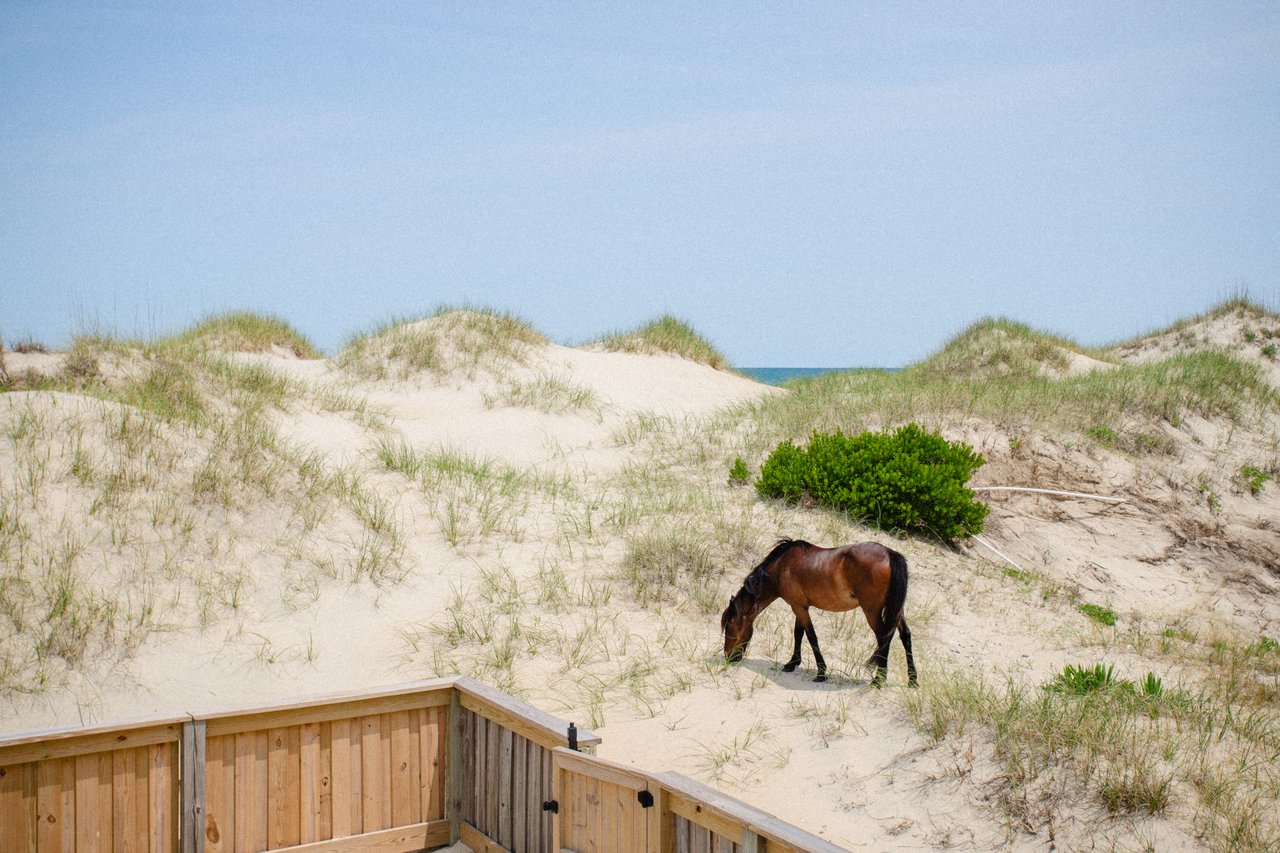
One of the most memorable parts of owning in Carova is sharing the area with the Corolla wild horses. The Corolla Wild Horse Fund says people must stay at least 50 feet from the horses at all times and must not feed them. If a horse appears sick or injured, the Fund says not to intervene directly.
Owners also learn that horse activity can affect where and how they move around the property. The Fund notes that horses can stand under houses, and in summer they often move toward the beach to get away from heat and biting insects. That makes respectful coexistence part of everyday ownership.
Respecting the setting protects the lifestyle
For many buyers, the horses and undeveloped landscape are a big reason Carova feels special. At the same time, those features are tied to rules and habits that owners need to follow consistently. This is not a place where convenience comes first.
Instead, the appeal is the sense of place. If you value privacy, natural surroundings, and a slower pace, Carova can be deeply rewarding. If you prefer simple paved access and fewer moving parts, it may feel more demanding.
Shoreline change is worth watching
If you own oceanfront property in Carova, shoreline conditions are not something to take for granted. Currituck County’s shoreline stability study monitors all 22.6 miles of county beach with annual spring surveys, beach-profile work every 1,000 feet, offshore bathymetry out to 2,500 feet, and projected 30-year shoreline-change analysis. That level of monitoring is a reminder that the shoreline changes over time.
For owners, the key takeaway is awareness. You want to stay informed about site conditions, access, and how a specific property sits in relation to the beach. In a market like Carova, local knowledge matters because no two stretches of shoreline behave exactly the same way.
Storm planning is part of responsible ownership
Storm readiness is a basic part of owning on the Outer Banks, and it is especially important in Carova. Currituck County classifies Carova Beach as Zone A, the highest-risk evacuation zone. The county also notes that evacuations may include any or all county zones depending on the storm’s track and intensity.
That does not mean a storm is always imminent. It does mean owners should have a plan, know their zone, and pay attention to official notices. Currituck sends evacuation and related emergency alerts through Currituck Alert, making it important to stay connected before and during hurricane season.
Re-entry can take time
The Access Permit also matters after a storm because it is designated as a re-entry permit for county residents and property owners. If a permit is lost, the county says proof of residency or ownership with a Currituck County address is required to regain access. That makes permit management more important than many first-time buyers realize.
Even when emergency services are in place, access may not reopen immediately. Currituck County notes that re-entry can be delayed by infrastructure outages, flooded roads, damaged structures, limited communications, or debris blocking roads. The county’s phased re-entry process also prioritizes essential personnel and certain critical businesses first.
For remote owners, that is a useful operational reality to understand. If your home needs post-storm work, access for contractors and service providers may happen in stages. Planning ahead and having trusted local support can make a major difference.
What vacation home life really feels like
In real life, Carova ownership often comes down to a series of small, repeatable logistics. You air down tires, track permits, plan for trash service, clear beach gear before dark, respect the horses, and stay weather-aware. None of those steps are hard on their own, but together they define the ownership experience.
For the right buyer, that is exactly what makes Carova special. You are not just buying a house near the beach. You are choosing a remote coastal lifestyle that asks more of you, but also gives you a kind of privacy, character, and natural setting that is hard to find elsewhere on the Outer Banks.
If you are considering a purchase in this market, it helps to work with someone who understands both the real estate side and the operational side. From access and permits to property setup and long-distance ownership, local knowledge can help you make a more confident decision. If you want guidance on Carova homes, lots, or the realities of 4WD ownership, connect with Jason Summerton.
FAQs
What is daily access like for a Carova Beach vacation home?
- Daily access in Carova Beach means driving in a 4WD-only area with no paved roads, airing down tires before entry, using 4WD, and planning ahead because there are no gas stations in the off-road area.
What permits do Carova Beach property owners need?
- Carova Beach property owners use the Currituck County Access Permit, which helps with area access, convenience center use, and re-entry after an evacuation.
What should Carova Beach owners know about guest parking?
- Carova Beach guest parking can be more structured in peak season, especially for visitors who are not renting in the 4WD area, so owners should plan guest arrivals and permit needs in advance.
What are trash requirements for Carova Beach homes?
- Carova Beach homes must follow county trash rules that include minimum container counts, animal-proof enclosures for homes using commercial pickup, and set removal frequency based on home size.
What do Carova Beach owners need to know about wild horses?
- Carova Beach owners should stay at least 50 feet from the wild horses, never feed them, and understand that horses may gather near homes or on the beach, especially in warmer months.
How does storm planning affect Carova Beach ownership?
- Carova Beach is in Currituck County’s highest-risk evacuation zone, so owners should monitor emergency alerts, keep permits accessible, and be prepared for possible delays in re-entry after a storm.